Can You Get Car Insurance Before Registering a Car in California?

If you just bought a car in California and don’t have your registration or license plates yet, you may be wondering whether you need insurance first. Yes, you can get car insurance before registering a car in California, and it’s best to arrange coverage before driving.
California requires drivers to maintain financial responsibility when operating vehicles on public roads. Most drivers meet this requirement through liability insurance, which helps pay for covered injuries or property damage they cause to others. You don’t need permanent registration to purchase a policy, but you’ll need to meet the state’s insurance and registration requirements before legally driving.
Key Takeaways
- You can purchase car insurance before registering a vehicle in California, even without permanent license plates.
- Insurance companies can typically use your vehicle identification number (VIN) to issue coverage.
- California requires minimum liability coverage of $30,000 per person/$60,000 per accident for bodily injury and $15,000 per accident for property damage.
- The California DMV verifies insurance electronically and may suspend registration if required coverage information is missing.
Can You Get Car Insurance Without Registration in California?
Yes. Most insurance companies can provide coverage for an unregistered vehicle using its VIN, purchase paperwork, and driver information. This allows you to insure a newly purchased car before receiving permanent registration documents or license plates.
You may need to provide the vehicle’s make, model, year, intended use, and the address where it will be kept. Insurance companies may also ask for proof of ownership or another acceptable reason for insuring the vehicle.
If the car is registered under someone else’s name, additional requirements may apply. In some situations, you can insure a car that isn’t in your name in California, depending on the insurance company’s rules.
Remember that purchasing insurance doesn’t automatically make an unregistered vehicle legal to drive. You’ll still need to satisfy California’s registration requirements.
How California’s Insurance and Registration Rules Work Together
California requires drivers to maintain financial responsibility when operating or parking vehicles on public roads. Most drivers meet this requirement by purchasing liability insurance that satisfies the state’s minimum coverage limits.
The California DMV typically verifies insurance electronically through information reported by insurance companies. If the DMV doesn’t receive proof of insurance within 30 days after issuing a registration card, it may suspend the vehicle’s registration. A lapse in coverage can also result in suspension if replacement insurance isn’t reported within the applicable timeframe.
California’s updated car insurance requirements explain the liability limits drivers must meet.
What Counts as Financial Responsibility?
Although liability insurance is the most common option, California recognizes alternatives, including:
- A $75,000 cash deposit with the California DMV
- A $75,000 surety bond from a licensed company
- A DMV-issued self-insurance certificate
These alternatives have different requirements and may involve significant financial commitments. For most individual drivers, purchasing a liability insurance policy is the most practical choice.
How to Insure a Newly Purchased Car Before Registration
Getting insurance before registering a vehicle is usually straightforward. These steps can help you arrange coverage when buying from a dealership or private seller.
1. Gather Your Vehicle Information
Before requesting a quote, have your VIN, vehicle year, make, model, purchase date, and driver’s license information ready. You may also need your purchase paperwork and the address where the vehicle will be kept.
Permanent license plates aren’t typically required to start the insurance process.
2. Compare Quotes and Choose Coverage
Contact an insurance company or agency to compare available policies. California requires liability insurance, but you may want comprehensive and collision coverage depending on your vehicle’s value and financial situation.
If you’re financing or leasing your car, your lender may require additional coverage. Compare policies with similar limits and deductibles to understand your options.
3. Activate Your Policy
Once you’ve selected coverage, confirm that your policy has been issued and is active before driving. A quote alone doesn’t provide insurance protection.
Your insurance company will typically report coverage electronically to the California DMV. Keep proof of insurance available in case you need to present it.
4. Complete Your Registration
After arranging coverage, complete the required registration or title transfer process with the California DMV. Depending on the transaction, you may need ownership documents, a smog certification, an odometer disclosure, and payment of applicable fees.
Preparing these documents ahead of time can make your California DMV visit easier.
What Does the California DMV Require to Register a Car?
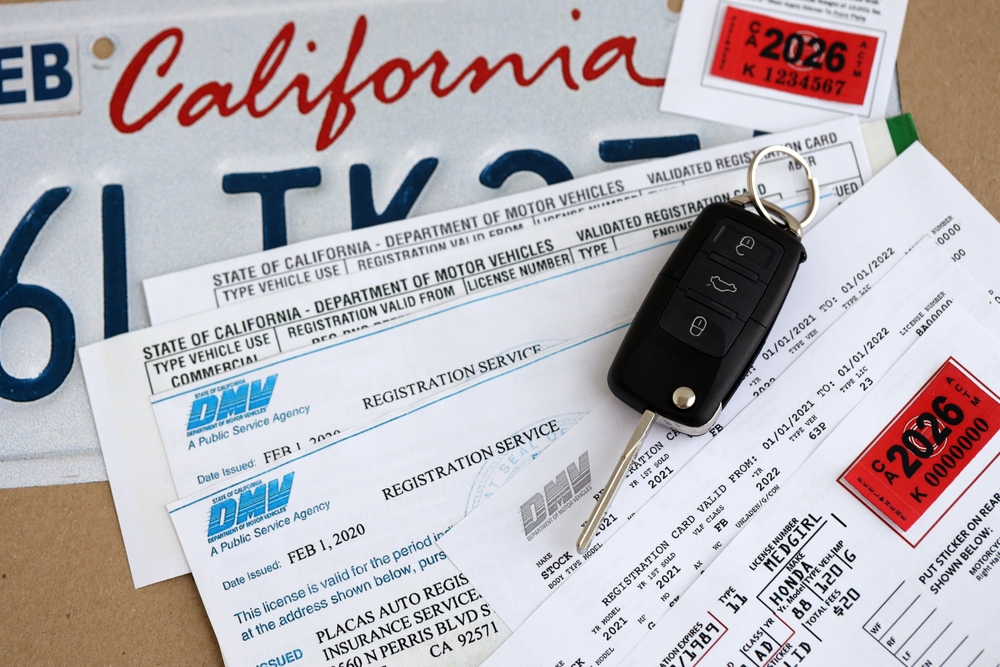
Registration requirements depend on whether you’re buying a new vehicle, transferring ownership, or bringing a car from another state.
| Requirement | Details |
| Title or Registration Application | Vehicle title, transfer paperwork, or REG 343, depending on the transaction |
| Proof of Financial Responsibility | Valid liability insurance or another DMV-approved option |
| Smog Certification | Required for certain vehicles, with applicable exemptions |
| Odometer Disclosure | Required for qualifying vehicle transfers |
| Vehicle Identification Number | Used to identify the vehicle |
| Registration Fees | Vary based on the vehicle and registration circumstances |
California generally requires buyers to transfer ownership within 10 days of purchasing a vehicle. New residents bringing vehicles into California typically must register them within 20 days of establishing residency or bringing the vehicle into the state.
These deadlines don’t replace the requirement to maintain financial responsibility when driving.
Minimum Coverage vs. Full Coverage for a Newly Purchased Car
Before purchasing insurance, consider whether California’s minimum liability requirements provide enough protection for your needs.
California’s Minimum Liability Requirements
As of January 1, 2025, California requires:
- Bodily injury liability: $30,000 per person/$60,000 per accident
- Property damage liability: $15,000 per accident
Liability insurance helps pay for covered injuries or property damage you cause to others. However, it doesn’t cover damage to your own vehicle.
What Does Full Coverage Include?
Full coverage typically refers to a combination of liability, collision, and comprehensive insurance. Collision coverage can help pay for damage to your vehicle after a covered collision, while comprehensive coverage can help with events such as theft, vandalism, or certain weather-related damage.
Drivers financing or leasing vehicles may need both coverages. If you own your car outright, consider its value and how much you could afford to pay for repairs before choosing your policy.
How Much Does Car Insurance Cost Before Registration in California?
Whether your vehicle is registered doesn’t automatically determine your insurance premium. Insurance companies consider several factors when calculating rates, including:
- Driving history and experience
- ZIP code and where the vehicle is kept
- Vehicle make and model
- Estimated annual mileage
- Coverage limits and deductibles
- Eligibility for discounts
Comparing quotes can help you find affordable coverage before completing registration. You may also qualify for California car insurance discounts, including good driver discounts and other savings offered by participating insurance companies.
If affordability is a concern, California’s Low-Cost Auto Insurance program may provide another option for eligible drivers.
Special Situations When Insuring a Car Without Registration
Some drivers face additional requirements depending on their vehicle’s ownership or registration status.
Can You Insure a Car With Expired Registration?
Some insurance companies may provide coverage for a vehicle with expired registration. However, purchasing insurance doesn’t renew the registration or automatically make the vehicle legal to drive.
You’ll need to resolve the registration issue with the DMV before operating the vehicle on public roads, unless a specific legal authorization applies.
What If Your Car Is Registered in Another State?
If you’re moving to California, you’ll need to follow the state’s vehicle registration and insurance requirements. Contact your insurance company to update your address and discuss coverage for a vehicle primarily kept in California.
An out-of-state policy may not satisfy California’s ongoing requirements, so confirm your coverage before completing registration.
What If Your Vehicle Isn’t Being Driven?
California offers Planned Non-Operation (PNO) status for eligible vehicles that won’t be operated or parked on public roads. Certain registered vehicles may also qualify for an Affidavit of Non-Use.
Some insurance companies offer comprehensive-only coverage for vehicles in storage. This may help protect against covered events such as theft or fire, but it doesn’t authorize you to drive the vehicle.
Get Car Insurance Before Registering Your Vehicle With Cost-U-Less
You don’t need to wait for permanent registration to start looking for car insurance. Cost-U-Less Insurance helps California drivers compare liability, collision, and comprehensive coverage options for newly purchased vehicles.
An agent can help you explore policies that fit your needs and budget when you’re buying your first car, replacing an older vehicle, or moving to California.
Get a free car insurance quote online, call 800-390-4071, or find a Cost-U-Less office near you to explore your options before heading to the DMV.
California Auto Insurance FAQs
Can I Drive My New Car Home in California Without Insurance If It’s Not Registered Yet?
You must have valid financial responsibility when driving on California public roads, even if you recently purchased the vehicle. If you already have an auto insurance policy, your insurance company may provide temporary coverage for a newly acquired vehicle, depending on your policy terms. However, you shouldn’t assume a grace period applies or that the seller’s insurance will protect you. Confirm that you have active coverage before driving home.
Does the California DMV Let Me Register My Car and Show Insurance Later?
California’s registration process may allow insurance information to be verified after a registration card is issued, but drivers must still maintain financial responsibility when operating a vehicle. The DMV typically receives coverage information electronically from insurance companies. If the required information isn’t received within 30 days after a registration card is issued, registration may be suspended. Having active insurance beforehand can help prevent complications.
What Happens If My Insurance Cancels After I Register My Car?
Your insurance company typically reports policy cancellations to the California DMV. If replacement coverage isn’t reported within the applicable timeframe, the DMV may suspend your registration. You cannot legally drive or park a vehicle with suspended registration on public roads. Contact your insurance company promptly and follow any DMV instructions to restore your registration.
Can I Use Out-of-State Insurance to Register My Car in California?
California requires registered vehicles to meet the state’s financial responsibility requirements. An out-of-state policy may not satisfy those requirements, particularly if the vehicle is primarily kept in California. If you’re moving, notify your insurance company and discuss updating your coverage. Confirm that your policy meets California’s requirements before completing registration.