

Ticket vs. Citation in California: What’s the Difference?

In California, a ticket and a citation are essentially the same thing. Many drivers get pulled over for speeding or other traffic violations at some point, and even having great, affordable car insurance does not prevent you from receiving one. Still, it’s common to feel confused in the moment and wonder about the citation vs ticket California distinction and the real difference between a ticket and a citation.
The paperwork you receive after a traffic stop can be overwhelming, especially if the situation is stressful. When drivers are flustered, it’s easy to miss important details or misunderstand what comes next. Questions often come up about deadlines, fines, court appearances, and how the violation may affect driving privileges. This confusion is why many drivers search for answers about the traffic ticket vs citation issue when dealing with California traffic violations.
Just as important, many drivers worry about how a traffic ticket or citation could impact their auto insurance rates. Will it add points to your record? Will your premiums go up? And are some violations more serious than others?
Understanding the difference between a ticket and a citation, along with how each type of violation works in California, can help you make informed decisions and avoid unnecessary surprises. This guide breaks down the terminology, explains the types of citations you may receive, and outlines how they can affect your driving record and insurance costs.
If you are dealing with a recent violation or simply want to be better prepared, taking a few minutes to review your coverage options can help you stay protected and confident on the road.
Breaking Down the Basics: Tickets vs. Citations
If you’ve ever been issued a citation for speeding, you may have wondered if it’s any different from a ticket. In California, the answer is simple. A citation and a ticket refer to the same legal document issued by law enforcement for a traffic violation.
The terms are used interchangeably by police officers, courts, and insurance companies. The name itself does not change the fine amount, court process, or how the violation is handled. What matters is the type of violation listed on the citation and how it is classified under California law.
When Is It Called a Citation?
Technically speaking, a California traffic citation is the official written notice issued by law enforcement that documents a traffic violation. This term applies broadly to both moving and non moving violations.
You may receive a citation for moving violations such as speeding, running a red light, failing to stop at a stop sign, unsafe lane changes, or reckless driving. More serious offenses like DUI or excessive speeding are also issued as citations, although they carry heavier penalties.
Citations also apply to non moving violations. These include parking violations, expired registration, equipment issues like broken headlights, illegal window tint, failure to wear a seat belt, or failure to provide proof of insurance during a traffic stop. Even though the vehicle may be in motion when the violation is discovered, the offense itself is considered non moving.
When Is It Called a Ticket?
Although the terms ticket and citation mean the same thing under California law, the word ticket is more commonly used in everyday conversation. Drivers, police officers, and even insurance companies tend to say “ticket” when referring to a traffic stop that results in a fine or required court action. The term is especially associated with moving violations, which are more likely to have consequences beyond a simple fine.
Most people think of a ticket as something that happens when they are pulled over for speeding. This is the most common scenario, which is why the phrase “speeding ticket” is so widely used. In practice, a ticket can be issued for any moving violation, including running a red light, failing to yield, unsafe lane changes, or reckless driving. In each of these cases, the officer is issuing a citation, but drivers almost always refer to it as a ticket.
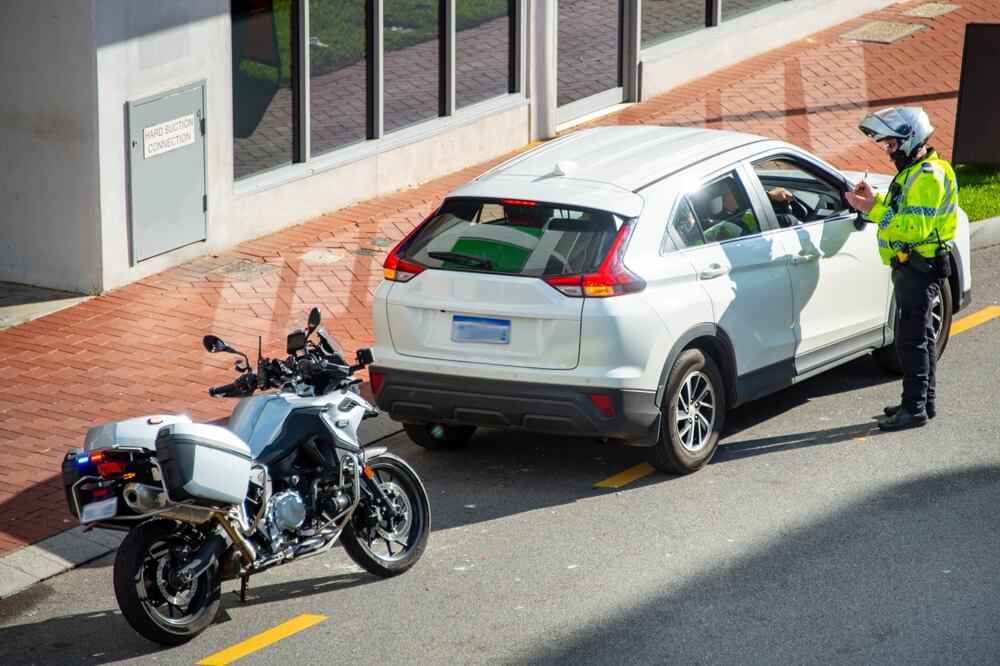
The word ticket is also commonly used once the citation enters the court system. Court notices, payment reminders, and informal legal discussions often reference “traffic tickets,” even though the official document remains a citation. From a legal and insurance standpoint, the terminology does not change how the violation is processed, how many points are added to your record, or how it may affect your auto insurance rates.
This is why drivers often use the terms interchangeably when discussing a traffic ticket vs citation, even though both refer to the same legal document. In short, when drivers talk about getting a ticket in California, they are simply referring to a traffic citation. The label itself does not matter. What matters is the type of violation listed on the ticket, how serious it is, and how it is handled by the court and the DMV.
Different Types of Citations and Tickets
California traffic citations fall into different categories based on how serious the violation is and whether the vehicle was in motion at the time.
Moving Violations
Moving violations occur when a vehicle is in motion and the driver breaks a traffic law. These violations typically carry the greatest impact on your driving record and insurance.
Common moving violations include speeding, running red lights or stop signs, illegal turns, failure to yield, unsafe lane changes, and reckless driving. DUI offenses are also considered moving violations and are among the most serious.
Moving violations usually result in points being added to your California DMV record. Accumulating too many points within a specific time frame can lead to license suspension.
Non-Moving Violations
Non-moving violations usually involve vehicle compliance or administrative issues rather than driving behavior. These violations typically do not add points to your record.
Examples involve (ironically) something police notice while you are driving. This includes having an expired registration, having faulty equipment like a broken taillight, or being unable to prove that you are properly insured. It also includes not buckling up, which is part of why seatbelts are so important. While these still come with fines, they generally do not affect your insurance rates unless they are tied to a more serious offense.
Severity Categories Under California Law
Traffic violations in California are also classified by severity.
- Infractions are the most common and least severe. Most speeding tickets and minor traffic violations fall into this category. They usually result in fines and points but not jail time.
- Misdemeanors include more serious offenses such as reckless driving or DUI. These can result in higher fines, license suspension, mandatory programs, and possible jail time.
- Felonies are rare in traffic cases but may apply in situations involving serious injury, fatalities, or repeat DUI offenses.
California’s Point System Explained
California uses a point system to track driving violations. Most minor moving violations add one point to your record. More serious violations, such as reckless driving or DUI, may add two points.
If you accumulate four points in twelve months, six points in twenty-four months, or eight points in thirty-six months, you may be classified as a negligent operator and face license suspension.
Points typically remain on your driving record for three years, although serious offenses may stay longer.
How Citations and Tickets Affect Your Insurance
The way a citation affects your insurance depends largely on the type of violation, and understanding how a ticket affects insurance can help drivers prepare for potential cost increases.
Moving violations are the primary reason auto insurance rates after a ticket often increase, especially for speeding or reckless driving offenses. Even a single ticket can lead to increased premiums.
Non-moving violations like parking tickets generally do not affect insurance rates because they do not indicate unsafe driving behavior.
Repeated violations, however, can significantly increase your premiums. Drivers with multiple tickets may be classified as high risk and required to obtain high risk auto insurance. In severe cases, drivers may need to file an SR- 22 to maintain legal driving privileges.
For example, in California, speeding tickets may cause premiums to increase anywhere between 29% and a whopping 70%, depending on several factors, including your driving record. Out-of-state tickets can haunt you in other ways.
Insurance companies regularly access DMV records and use rating algorithms that adjust premiums based on violations, claims history, and risk trends. Insurers rely on DMV data to calculate auto insurance rates after a ticket, often adjusting premiums shortly after a violation appears on your record. Rate increases often occur quickly after a violation appears on your record.

Proactive Measures to Mitigate the Damage
After receiving a ticket or citation, there are steps you can take to reduce the impact.
- Review the citation carefully for errors. Incorrect information can sometimes be grounds for dismissal.
- Consider contesting the ticket in court if you believe it was issued incorrectly.
- Check eligibility for traffic school. Completing traffic school can prevent points from appearing on your driving record for certain violations.
- Pay fines on time to avoid additional penalties.
- Use telematics or safe driving apps that monitor driving behavior. These tools can help demonstrate improved driving habits and may qualify you for discounts.
- Maintain continuous insurance coverage and shop around if your rates increase.
Get Affordable Car Insurance, Even After a Ticket
Even after receiving a ticket or citation, affordable coverage is still possible. At Cost U Less, we specialize in helping California drivers find insurance solutions that fit their needs, even after violations.
Our agents understand how tickets affect insurance and can help you explore options that keep you protected without overpaying. Call us at 800 390 4071, get a fast and free quote online, or visit a Cost U Less office near you.
FAQs
Does a parking citation affect my insurance rates in California?
No. Parking citations are non-moving violations and generally do not affect insurance rates.
If I contest and win, will my ticket still count on my record?
No. If the ticket is dismissed, it should not appear on your driving record or affect your insurance.
How long does a traffic violation stay on my California driving record?
Most minor violations stay on your record for three years. Serious offenses may remain longer.
Will my insurance automatically increase if I get a speeding ticket?
Not always, but many insurers raise rates after a moving violation appears on your record.

